The problem
In many foundries, shop-floor data arrives late or not at all. Nobody types a report on a terminal in foundry gloves, so heats, moulds, scrap and chemistry get reconstructed from paper at the end of the shift.
What I built
GussCore follows a casting from catalogue and order through the weekly plan, the production batch, the melt shop and quality control to shipment, and compares planned with actual cost.
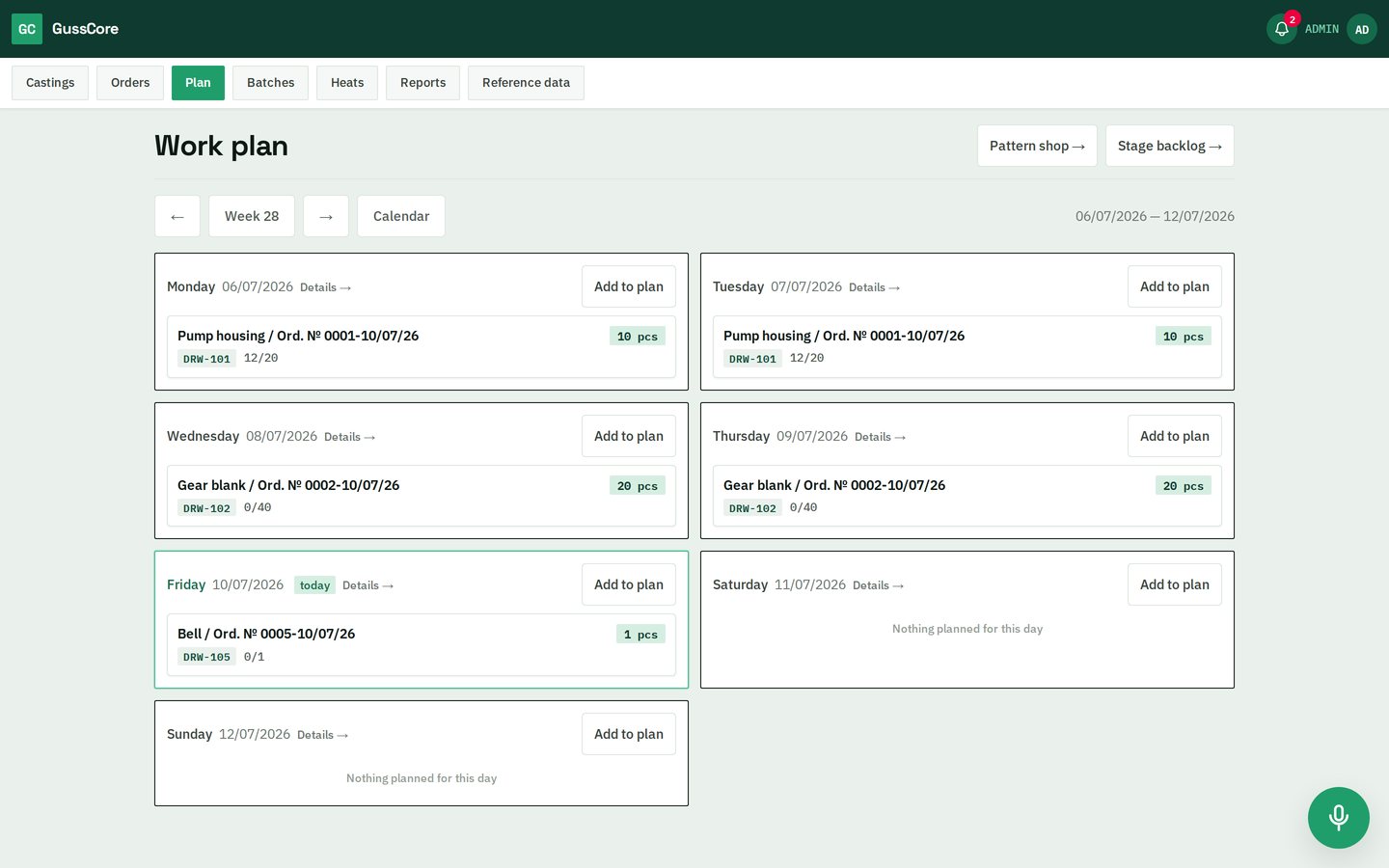
Weekly work plan in the public demo build, with generic data.
On top of that sits an AI layer that never writes anything by itself. A worker says "poured 10 moulds of pump housing, heat 5". Speech-to-text and a local language model turn this into fields of a fixed JSON schema, a resolver matches the words to real stages, batches and heats, and the result appears as a proposal that a person confirms. Photos of lab chemistry protocols and of defects go through a vision model into the same loop. The models (Whisper and Qwen, served by Ollama) run on the plant's own GPU, so production data stays in the plant, and every confirmed proposal becomes an example for later prompts.
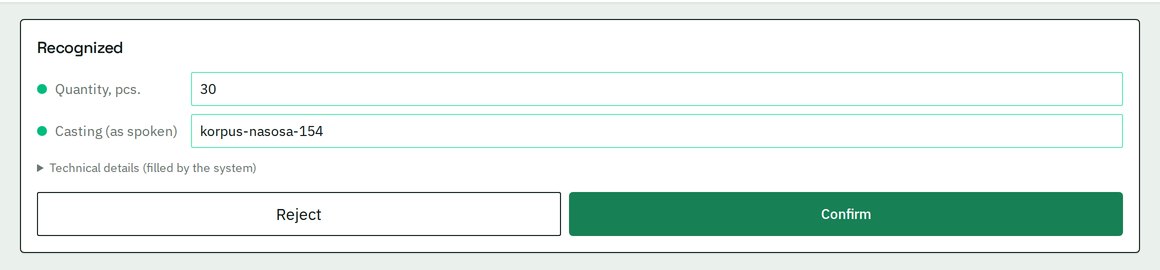
A recognised voice report waiting for confirmation.
The backend uses FastAPI, Pydantic v2, SQLAlchemy 2 and PostgreSQL, and the frontend is a SvelteKit web app for phones. The architecture is hexagonal, every change goes into an append-only log of more than 60 event types, and 8 roles have field-level permissions. The code has more than 300 tests and 15 recorded architecture decisions.
Status
GussCore has been piloted at a two-plant foundry group. A public evaluation build with generic data is on GitHub: github.com/eugenmik/gusscore-erp.